Photograph by John Robert McPherson, Wikimedia Commons, CC BY-SA 4.0
One card, one tap on, one tap off
Trains, buses, ferries and light rail in Sydney all run on the same fare system, and you almost
certainly do not need to buy anything to use it. A contactless credit or debit card, or a phone,
works at the gate exactly like an Opal card and earns exactly the same caps. Tap the reader on the
way in and tap it again on the way out.
⚠️ Tapping off is not optional. Fares are distance-based, so a missed tap-off
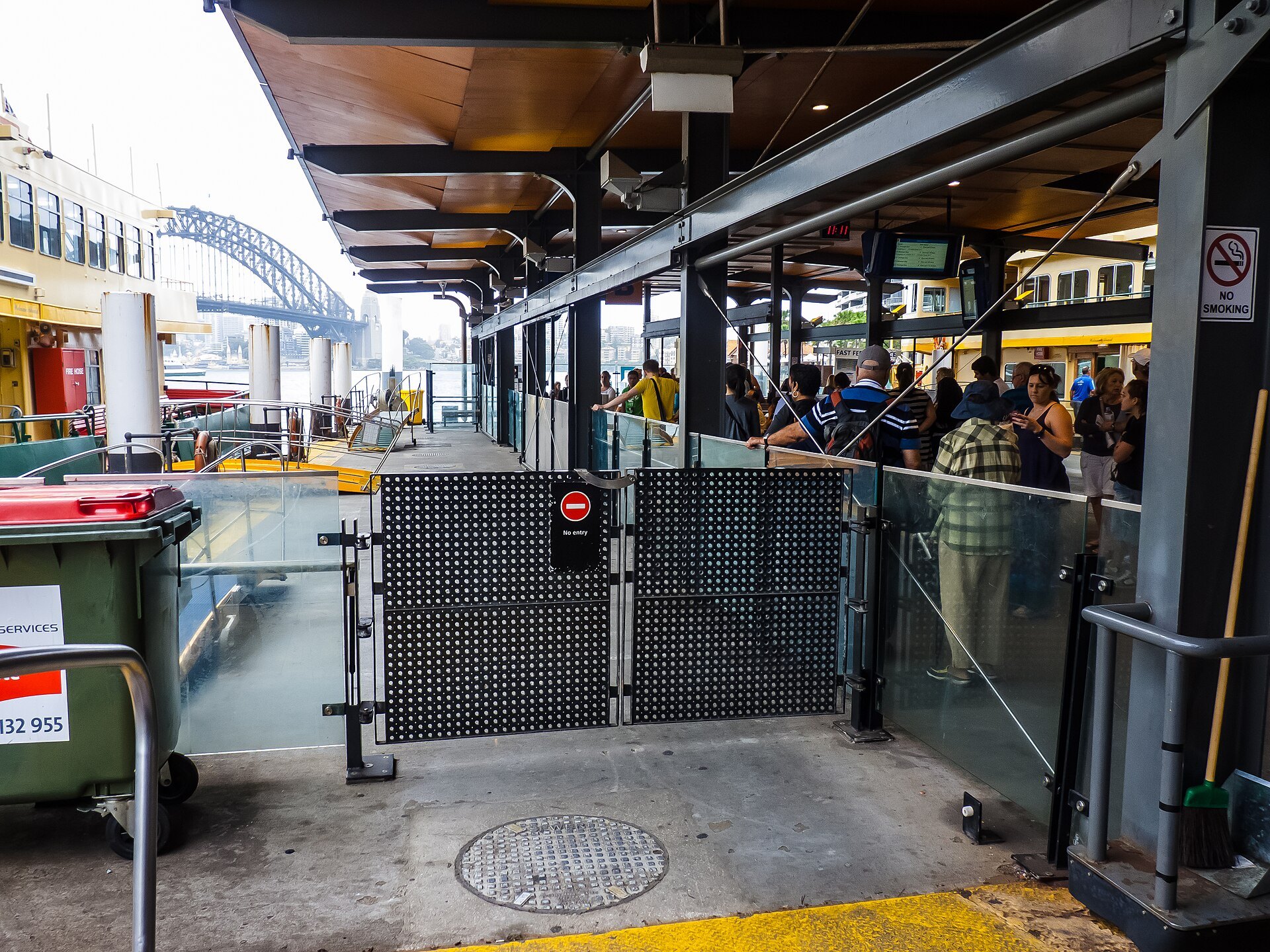
charges you the maximum fare for that line. On a bus the reader is by the door; on a ferry it is on
the wharf; on a train it is the gate.
There is a cap on what you can be charged in a day, a lower cap that applies on Sundays, and a
weekly cap after which further travel that week is free. Once you have hit a cap, every further
trip that period costs nothing — which is why a Sunday spent crossing the harbour repeatedly is one
of the best value days available anywhere.
⚠️ Use the same card every time. Caps are counted per card, so alternating
between a phone and a plastic card splits your travel into two half-counted totals and you reach
neither cap.
Ferries — the reason this site has a section for them. Ordinary fares, and the
crossing to Manly is the best half hour on the network. See
Harbour & Ferries.
Trains — double-deck, frequent, and the fastest way across the city. The City
Circle loops the centre, so the "wrong" platform usually still gets you there.
Buses — how you reach the beaches. ⚠️ There is no train to Bondi Beach: the
train goes to Bondi Junction and a bus takes you down the hill.
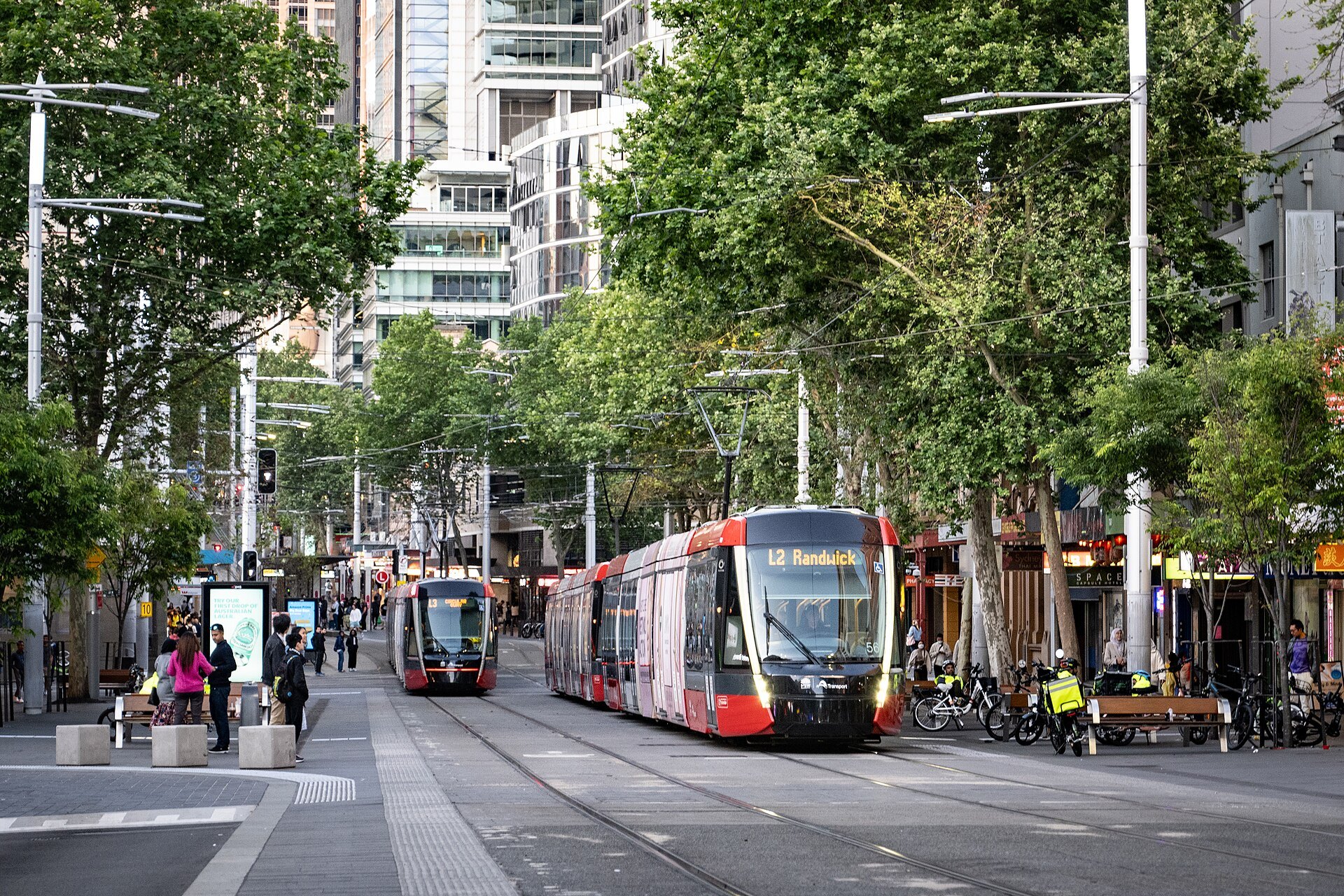
Light rail — useful along George Street and out to the inner west, slow, and
pleasant.
⚠️ The one fare that is not ordinary
The two railway stations at the airport are privately operated and add a station access
fee on top of the normal fare, in each direction. It is legitimate and it is signposted,
and it still surprises almost every visitor. The ways around it are set out in
Getting Here & Onward.
On foot
The centre is small and hilly and almost everything on this site inside the city is walkable:
Circular Quay to Hyde Park is twenty minutes, the
Botanic Garden is a continuous green route from the
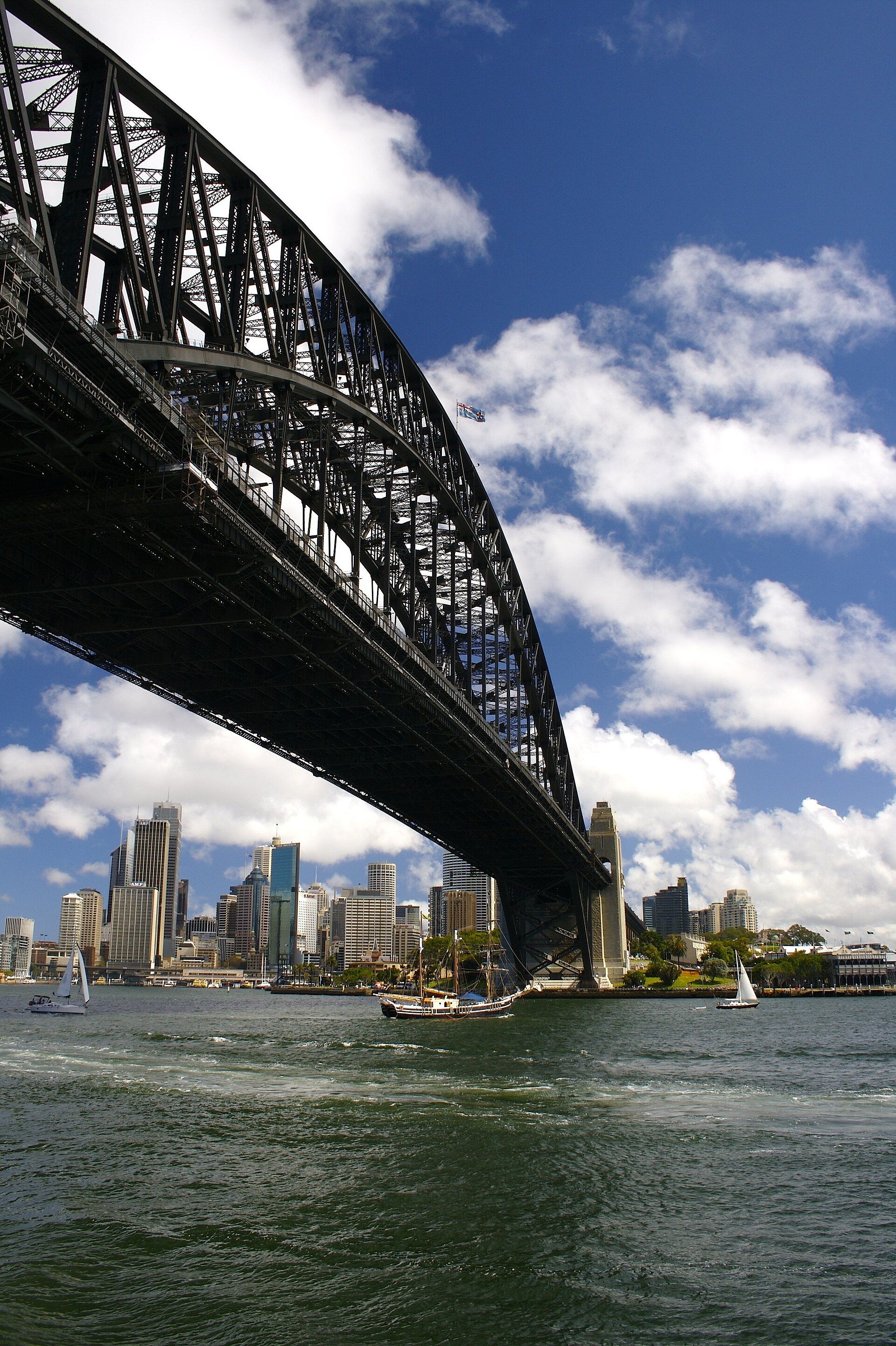
Opera House to the Art Gallery, and the bridge has a free
footpath all the way across.
There is no railway line to Bondi Beach, and there never has been. The nearest station is Bondi Junction, a kilometre and a half inland, and every trip finishes on a bus, on foot, or in a car. The question worth answering is not “how do I get to Bondi,” but which of those last-mile … Read more
Most visitors do not need an Opal card. A contactless bank card or phone works at the same gates, taps on and off the same way, and earns the same fare caps as Opal. Buses, trains, ferries, light rail and the Metro all read it. The exceptions are narrow. They involve concession fares, NSW TrainLink’s … Read more
Miss a tap-off on Sydney’s Opal system and the reader is charged the maximum fare. That’s the highest single fare on the line — not what the trip actually cost. Transport for NSW assumes the worst case: that the journey ran the full length of the route. This is the maximum fare rule. It applies … Read more
What the caps actually do Opal fares are capped, not fixed. Tap on and off enough times in a day, and the system simply stops charging you once you hit a set amount. Keep traveling through the week, and a second, higher weekly threshold takes over. Sunday sits apart entirely, with its own much lower … Read more
.jpg)


,_The_Rocks_--_2019_--_2133.jpg)