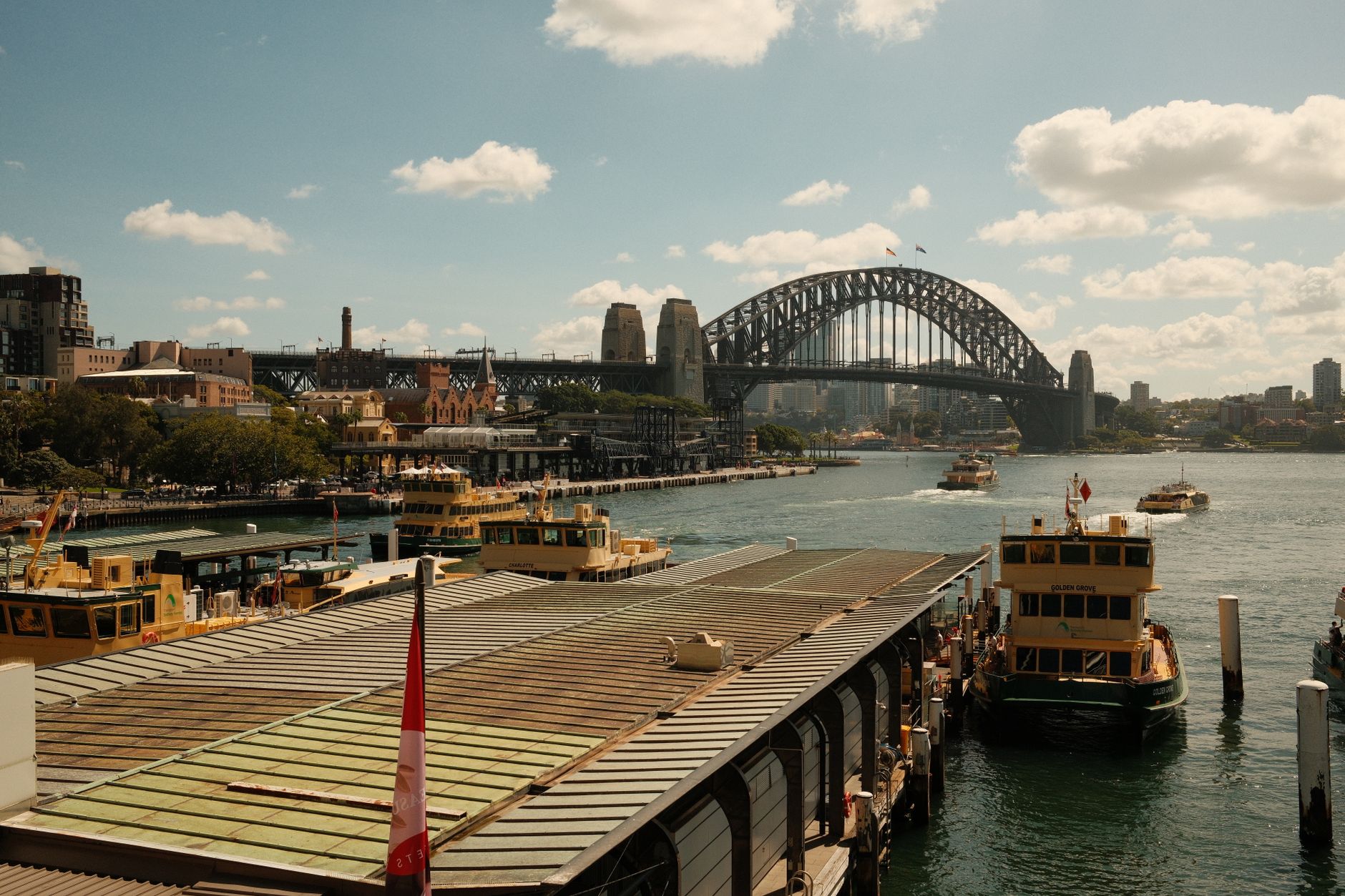
What rain actually changes
Rain does not close Sydney down. It closes specific things. The fast ferries to Manly and Watsons Bay usually go first. They are suspended when wind or swell crosses a safety threshold — not because of rainfall itself. Walking routes get slower and slipperier, not impossible. Indoors, the free state galleries keep their doors open. A near-600-meter underground corridor also lets you cross the CBD, from Pitt Street Mall to the Strand Arcade, without an umbrella.
The decision rule: what Sydney Ferries pulls first
Not all rain behaves the same way. The gap between drizzle and a storm warning matters more than how wet the footpath looks. Sydney Ferries treats wind and swell, not rainfall, as the trigger for suspending a run. The open-water legs to Manly and Watsons Bay take chop and gusts that the inner-harbor routes rarely see. They are usually the first services pulled in a heavy blow. Check Transport for NSW’s live service status before building a ferry into a rainy-day plan.
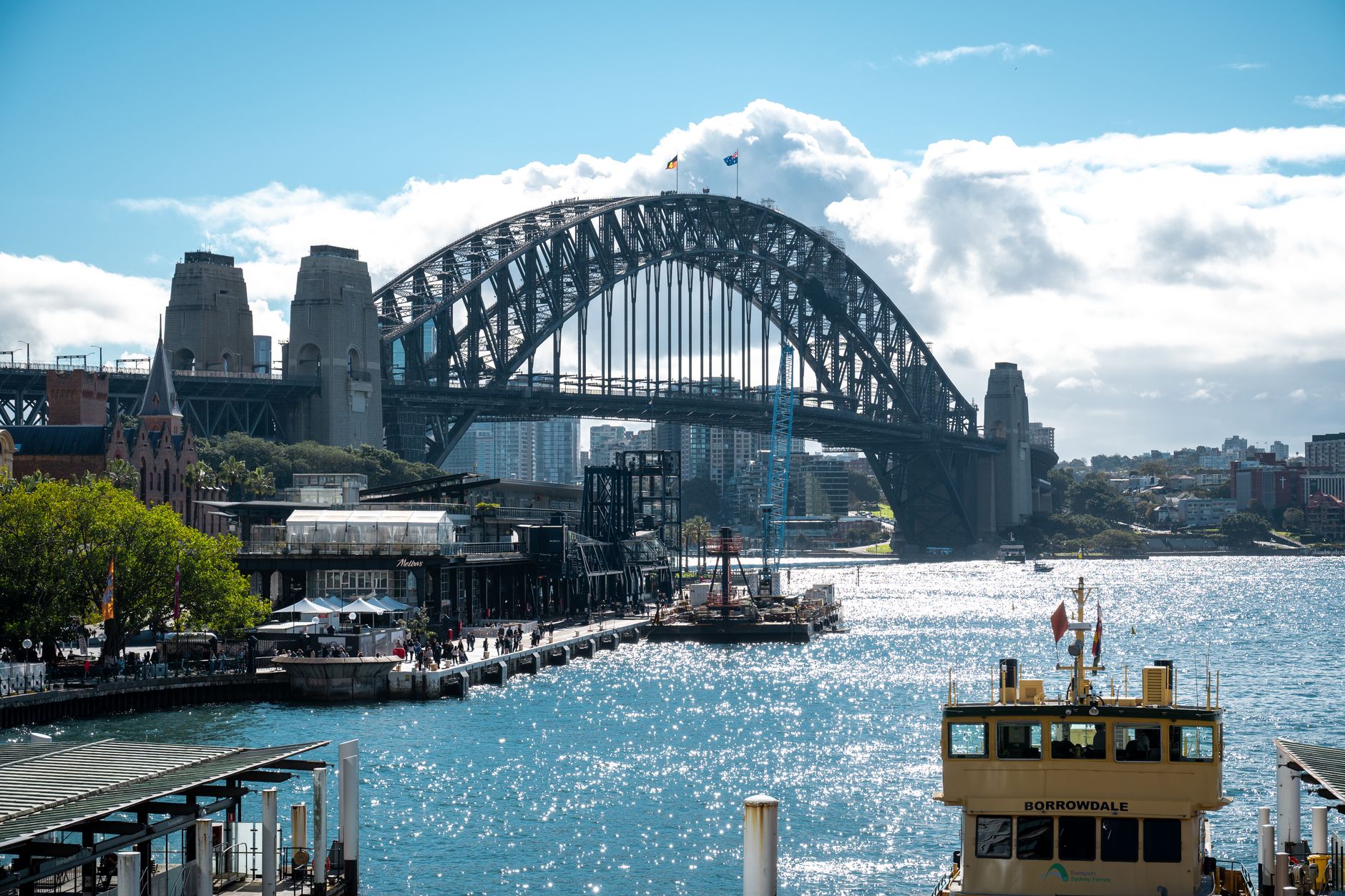
- Light rain, no wind warning: the harbor walks hold up. Routes like the walk to Sydney’s best free view or the pedestrian crossing of the Harbor Bridge stay open. Bring a coat, not a backup plan.
- Moderate rain, gusty conditions: the Manly and Watsons Bay fast ferries become vulnerable to a wind or swell warning. Check the status page before you leave, and keep an indoor fallback ready.
- Storm warning, heavy rain with swell: Sydney Ferries typically suspends the Manly and Watsons Bay runs first, since open water amplifies both wind and chop. Cross them off the plan, and switch to the indoor corridor below.
The dry corridor: Pitt Street Mall to the Strand Arcade
Pitt Street Mall sits at the retail heart of the CBD. From its northern end, underground and arcade-level links carry foot traffic through to the Strand Arcade without a step outdoors. The route passes beneath the Queen Victoria Building, a heritage-listed 1898 shopping arcade with a central glass dome. It continues to the Strand Arcade, built in 1891 and still trading as one of the city’s Victorian-era arcades. Together the links cover roughly 600 meters of continuous indoor walking. That is useful once the forecast turns, and it costs nothing beyond the fare that already got you into the city.
What stays free, rain or shine
The Art Gallery of New South Wales holds a free permanent collection. It charges only for ticketed temporary exhibitions — confirm current detail on the gallery’s own site, since admission policy can shift. The State Library of NSW keeps its reading rooms and most exhibition spaces open at no charge. The library’s own site sets out current detail, on sl.nsw.gov.au. Neither depends on the weather. Both sit within walking distance of the dry corridor above. For a wider list of no-cost options, and what each one actually involves, see Eleven Free Things in Sydney, and the Catch in Each One.
The fare doesn’t change because it’s raining
Whatever the forecast, Opal fares work the same way: tap on, tap off, and the system charges by distance. Miss the tap-off and you’re charged the maximum possible fare for that trip, rain or not. The mechanics are set out in Tap Off, or Pay the Maximum Fare: The Opal Rule Explained. A rainy-day switch from ferry to bus to train still counts toward the same caps, provided you stay on one card or phone. See Opal Caps Explained for how those daily, weekly and Sunday bands work. None of this is suspended by weather. A ferry that is running charges the ordinary fare, same as the bus that replaces it when ferries aren’t.
Checking before you leave
Sydney’s rain mostly arrives in short, heavy bursts, not as an all-day soak. That is why checking conditions an hour ahead works better than checking the night before. The Bureau of Meteorology publishes short-range radar for the Sydney basin. Transport for NSW’s service alerts update in real time once a warning is issued. Between the two, you can tell within minutes whether the plan is a harbor walk, a gallery, or the corridor under the CBD. For broader background on how these transport fares and categories work, see Getting Around and Landmarks & Sights.
Access Sydney is an independent guide written from published, checkable sources. We have not visited the places described here and we do not publish personal recommendations or invented ‘local favorites’ — where something is singled out as notable, we say who says so. Opening times, fares, closures and prices change at short notice, so treat everything here as a starting point and confirm with the museum, operator or venue directly before building a day around it. We give no advice on visas, insurance, health or safety; use your own government’s official guidance for those.